

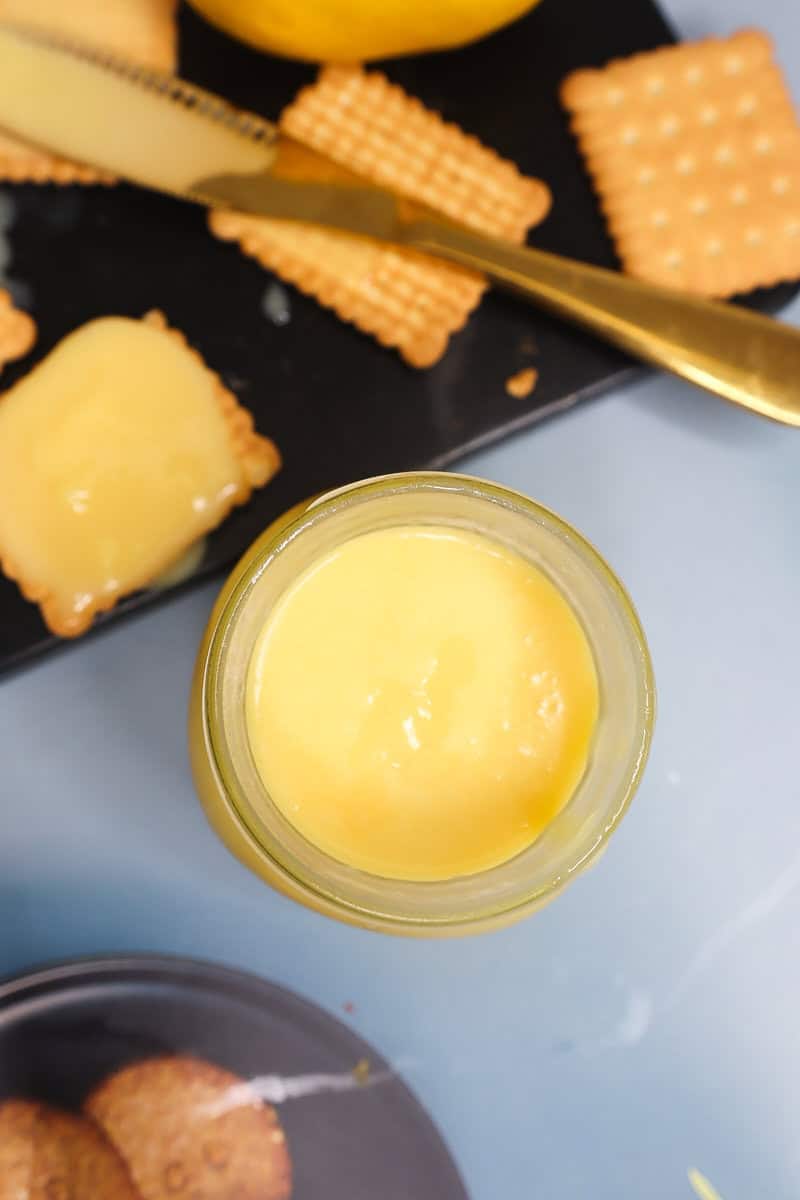
This Easy Homemade Lemon Curd recipe is a deliciously tangy, creamy spread or filling made from lemons, sugar, eggs, and butter. It has a citrus flavor and a bright color. Dollop it on scones, swirl it into yogurt, spread it on cookies, and layer it on cakes. It's sunshine, indeed.
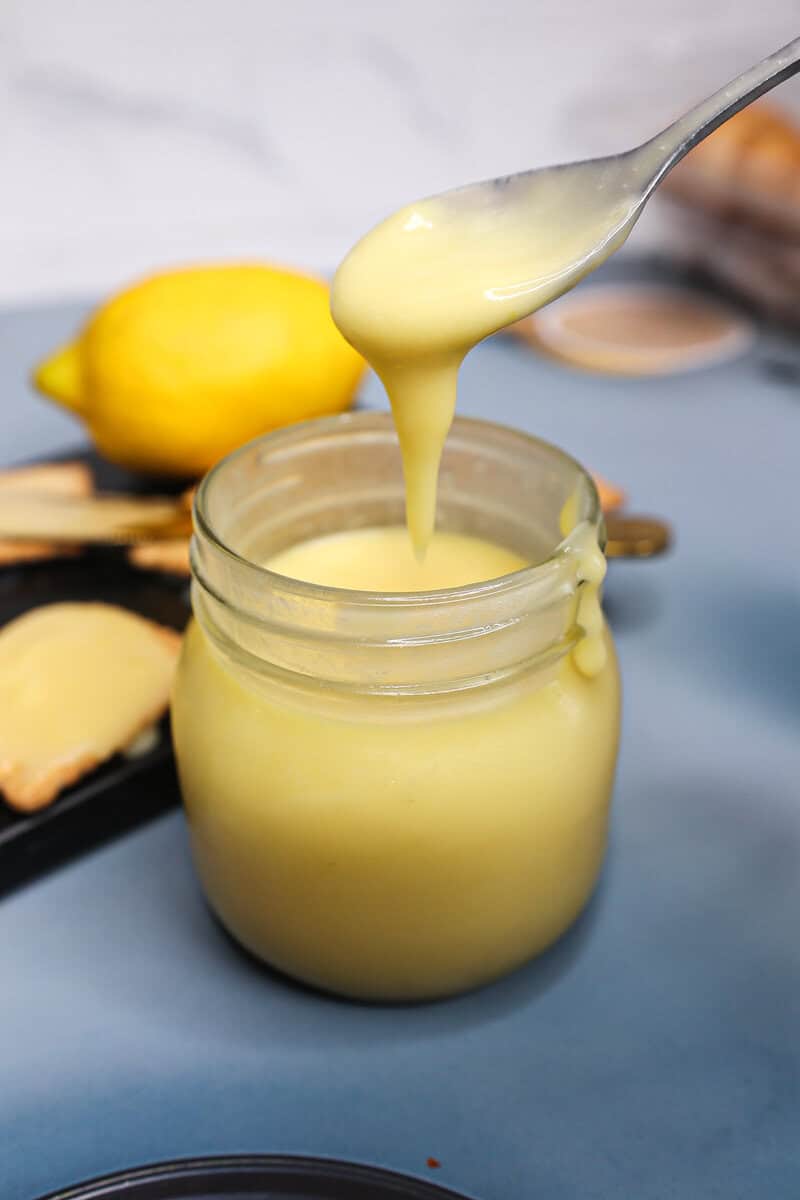
If you are a frequent visitor to my page, you will know I have a serious love affair with lemon desserts or anything with lemon. Whether to bake, cook, or grill with the zest or juice. This lemon bundt cake and lemon loaf are my favorites. I love lemon in this lemon tea or lemon turmeric shot.
To grill, I added lemon juice to this baked tilapia, also an ingredient in many of my salad dressings like Meditternaead salad, pasta salad, and chickpea salad.
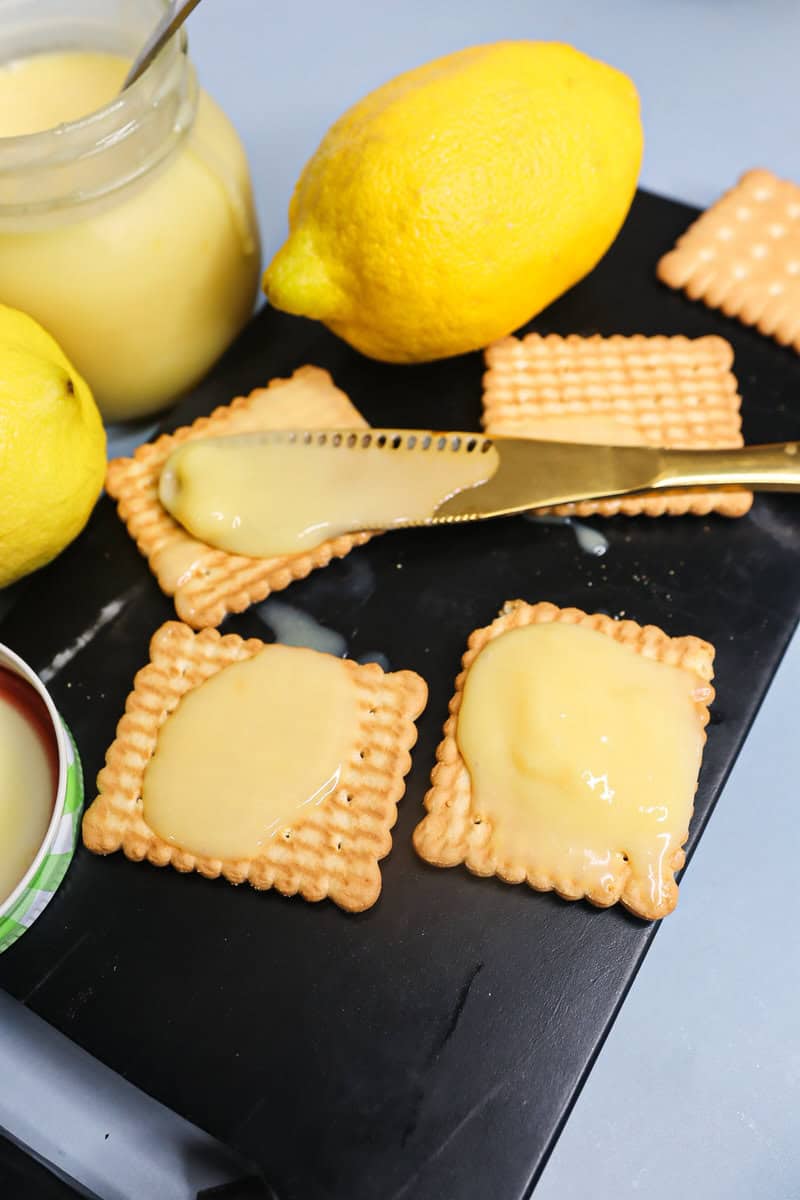
Lemon curd is often used to fill tarts, lemon bars, cakes like lemon cheesecake, cupcakes, and pastries like lemon meringue pie or spread onto toast, scones, pancakes, or crepes. It's a versatile and flavorful addition to many desserts and baked goods. I used it to fill my homemade doughnut, make sure you check it out.
Jump to:
Why Choose This Recipe
It uses a balanced ratio of lemon juice, zest, sugar, and eggs, giving it the perfect tangy taste without overpowering.
This recipe uses the double boiler method, preventing curdling and producing a velvety curd that spoons well.
Simple pantry ingredients, quick to make. and no fancy equipement.
Recipe Ingredients
- Fresh lemon juice: I always recommend freshly squeezed lemon juice because bottled juice can taste flat or bitter. Fresh lemon juice has citrus oils and a natural tartness that makes curd perfect.
- Lemon zest: Intensifies the lemon flavor without adding more acidity.
- Large egg yolks are the base of the curd because eggs thicken the mixture, giving it a custard-like consistency. Separate the yolks from fresh whole eggs
- Sugar: Balances the tartness of the lemon juice and adds a glossy finish.
- Unsalted butter: It mellows the sharpness of the lemon-balanced finish
- Pinch of salt: To sharpen the lemon flavor and balance the sweetness.
How to make Homemade Lemon Curd
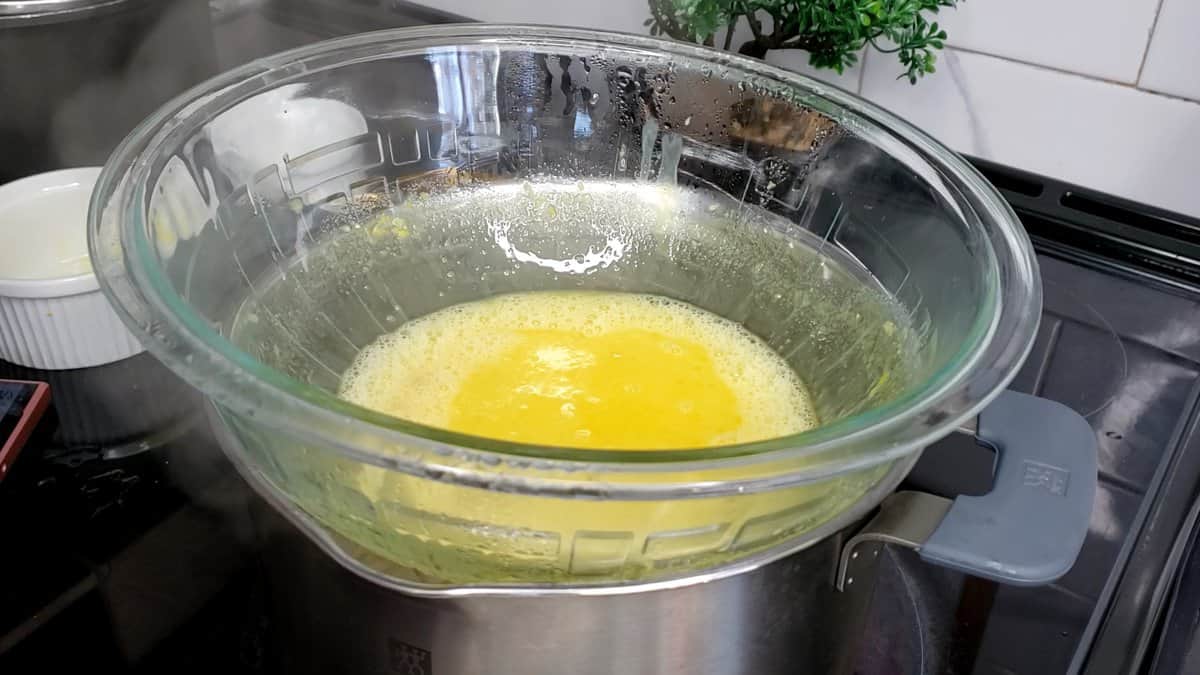
- Fill a saucepan or pot with 1-2 inches of water and simmer over medium heat. Place the heat-proof bowl on top of the pan. Let it just sit above the water without touching it.
- Add all the ingredients, with the egg being the last. DO NOT ADD THE BUTTER AT THIS POINT. Whisk until it starts getting thick, about 10 minutes.

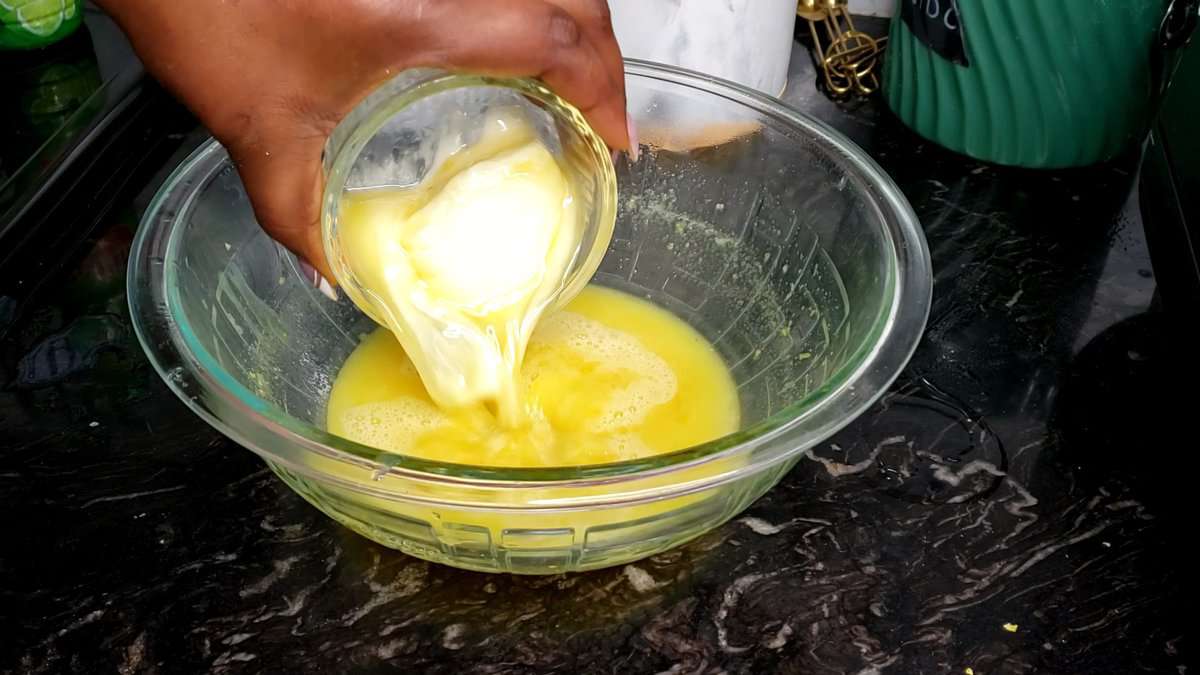
- Remove from the heat and add the butter. Stir or whisk until the butter melts.
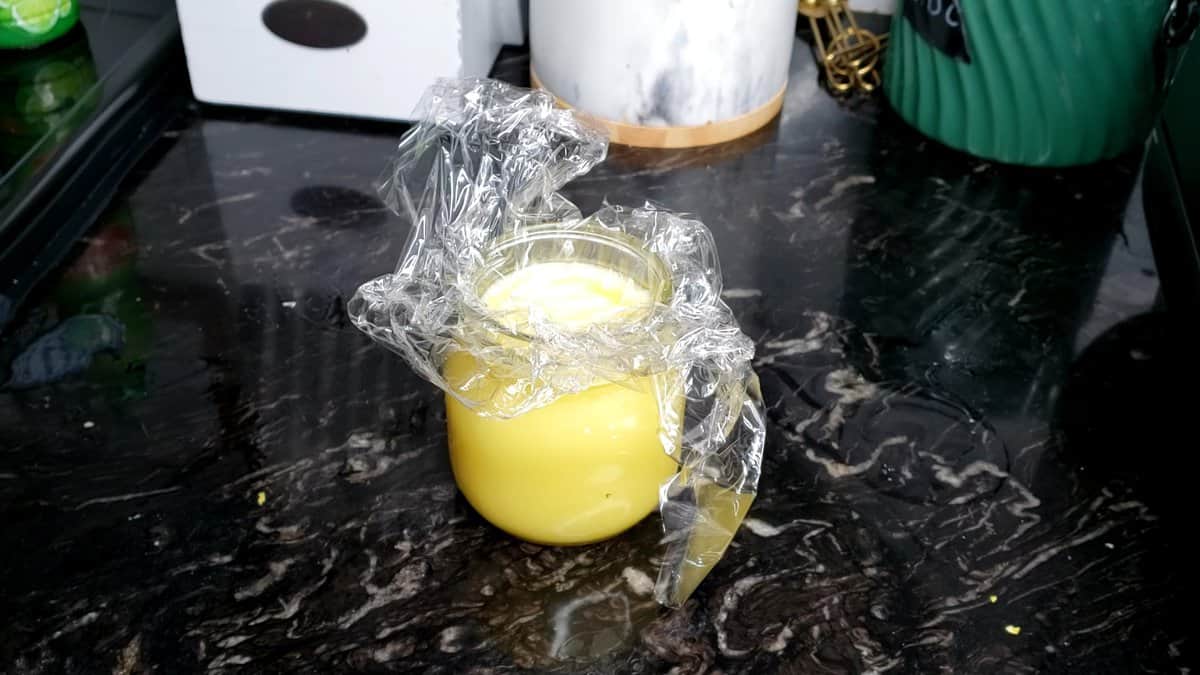
- Transfer to a jar or container, and gently press with a piece of plastic wrap on the surface of the curd to prevent skin from forming. Let it cool in the fridge for 2-3 hours to thicken fully.
IMPORTANT RECIPE TIPS
- Use the double boiler method, where you place the glass bowl with the ingredients on top of a pot of boiling water. The glass bowl should be heat-friendly.
- DO NOT USE A METAL BOWL; this will result in a greenish-coloured curd or metallic taste. NEVER COOK IT ON DIRECT HEAT, and NEVER STOP WHISKING WHILE THE CURD IS ON HEAT. Use the double boiler method.
- Put the egg with the last ingredients and whisk quickly so the eggs don't scramble. Or mix everything except the butter before putting it over the heat.
- Strain is optional. For ultra-smooth texture, pour it into a clean bowl through a fine mesh sieve to remove any zest or tiny uncooked eggs.
- Use fresh lemon juice and zest for a vibrant yellow color. Don't use bottled lemon juice.
- Use unsalted butter and add it off the heat.
- Add heat if your card isn't slightly thick after whisking for 10 minutes. Even if it doesn't get thick, do not fret. It will thicken in the refrigerator,
- Let it cool in the refrigerator so it thickens faster. The longer it cools, the thicker it becomes. Spoon it and use it.
Recipe FAQs
Store in an airtight container or clean glass jar in the refrigerator for up to 1 week and freeze for up to 3 months. Thaw overnight in the fridge before using, also stir after thawing to restore smoothness.
Both can be used, but each gives its texture and richness. Whole eggs provide a brighter, lighter, and less rich curd, while egg yolks give an ultra-rich, thick, and custard-like texture. Curdles faster.
Many things can result to that. Either it wasn't cooked long enough (to fix, return it to the double boiler and cook again). There is an incorrect egg ratio (add 1 -2 egg yolks, a tablespoon of sugar, and a splash of lemon juice and whisk until it thickens). It hasn't chilled enough (return it to the fridge and let it cool again). There is too much liquid (add egg yolk or slurry of 1 teaspoon cornstarch and 1 tablespoon of water, then cook gently until thick).
It will scramble the egg.
More Lemon Recipes To Try



If you tried these homemade lemon curd or any other recipe on my website, please leave a 🌟 star rating and let me know how it went in the 📝 comments below. Thanks for visiting!

Homemade Lemon Curd
Ingredients
- 4 Egg yolks
- ½ cup Sugar
- ½ cup Butter unsalted and softened
- ⅓ cup Freshly squeezed lemon juice
- 1 tablespoon Fresh lemon zest from 2 medium whole lemons
- pinch of Salt
Instructions
- Put a glass bowl on top of an open pot of boiling water.
- Add all the ingredients, with the egg being the last. Do not add the butter yet. Whisk until the sugar melts.
- Keep whisking until it's slightly thick for 10 minutes. If it's not getting thick, add the heat.
- Remove the curd from the heat and add the softened butter. Keep whisking until the butter melts with the residual heat.
- Transfer to a bottle or jar and place a cling film on the curd so skin doesn't form.
- Keep it in the refrigerator to cool and thicken. The longer it cools, the more it thickens.
- Serve with your favourite desserts.


Bilikis says
This is so nice